How to Play Chess for Beginners: Basic Rules and Winning Tips
Learning how to play chess for beginners is an exciting journey into one of the world's oldest and most respected games of strategy. While the game can seem intimidating due to its depth, the fundamental rules are quite simple to grasp. Whether you are teaching your children or picking up the game as an adult, understanding the basic mechanics allows you to focus on the creative and tactical side of the match. This guide will walk you through everything from setting up the board to delivering your first checkmate.
Setting Up and Learning the Basics
Orient the Board and Place the Pieces

- Verify that the square in the bottom-right corner is a light-colored square before placing any pieces.
- Place the pawns on the second rank to create a defensive line in front of the major pieces.
- Position the Queen on the square of her own color: white queen on white, black queen on black.
- Place the King on the remaining square next to the Queen.
- Avoid swapping the King and Queen positions, as this is a common beginner error that invalidates the starting setup.
Execute Piece Movements and Captures

- Rooks move any distance horizontally or vertically, making them powerful for controlling open files.
- Bishops move diagonally and are restricted to the color of the square they start on.
- The Knight moves in an 'L' shape and is the only piece capable of jumping over other pieces.
- The Queen is the most powerful piece, combining the movement of both the Rook and the Bishop.
- Remember that pawns capture diagonally, even though they move forward vertically.
Apply Special Move Rules
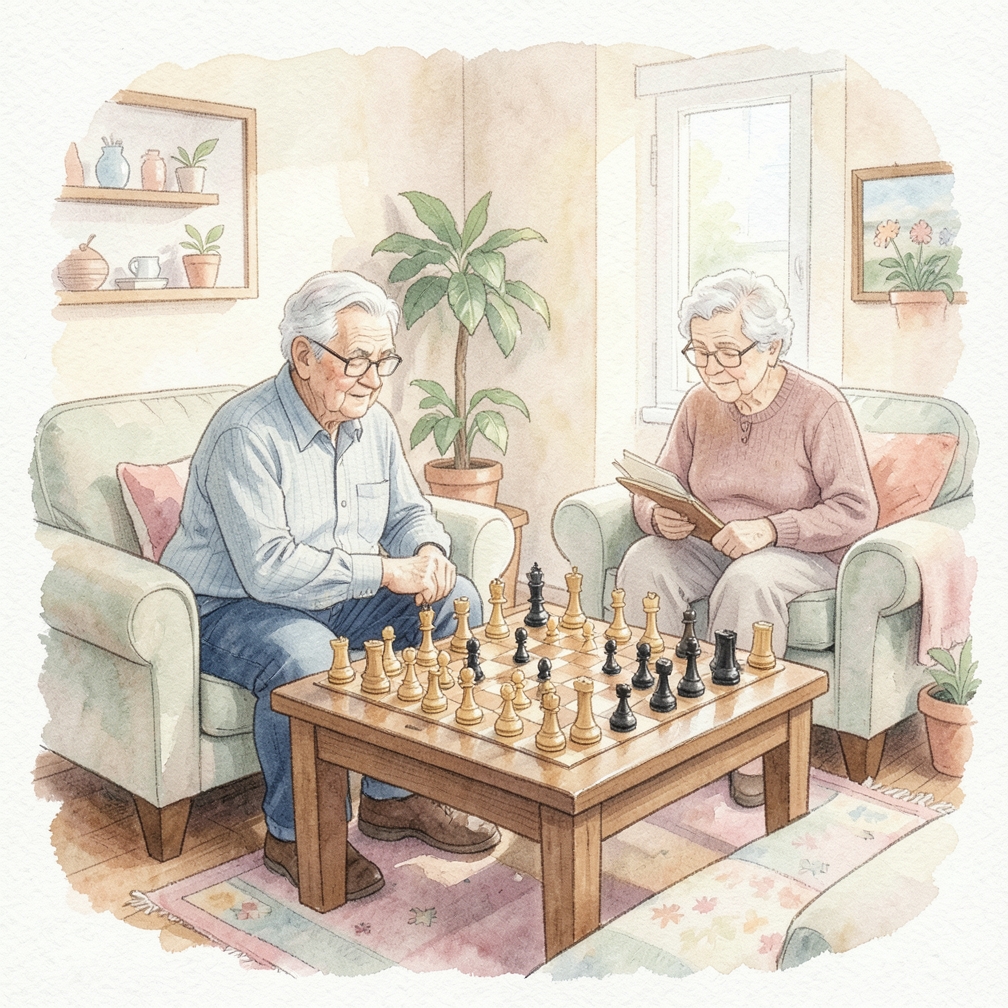
- Castling allows you to move your King two squares toward a Rook and jump the Rook over the King in one turn.
- Pawn Promotion occurs when a pawn reaches the opposite end of the board, allowing it to become any piece except a King.
- En Passant is a special pawn capture that can only happen immediately after an opponent moves a pawn two squares forward.
- Use castling early in the game to tuck your King into a safe corner and bring your Rook toward the center.
- You cannot castle if your King is currently in check or if the pieces have already moved.
Winning Strategies and Gameplay
Establish Control of the Center
- Open the game by moving center pawns to e4 or d4 to claim space.
- Develop your Knights and Bishops toward the center to support your pawns.
- Avoid moving too many pawns in the opening; focus on getting your minor pieces into the action.
- A piece in the center can influence more squares than a piece on the edge of the board.
- Use your center control to launch attacks on the opponent's flanks.
Manage King Safety and Checkmate

- Check occurs when the King is under attack but can still escape via moving, blocking, or capturing.
- Checkmate is achieved when the King is in check and has no legal moves to escape.
- Coordinate multiple pieces, such as a Queen and a Rook, to create a 'ladder' mate against the edge of the board.
- Be wary of stalemates, where the opponent has no legal moves but is not in check, resulting in a draw.
- Always evaluate if your move leaves your King vulnerable to a discovered check.
Calculate Exchanges and Piece Value
- Generally, Pawns are 1 point, Knights/Bishops are 3, Rooks are 5, and Queens are 9.
- Avoid trading a higher-value piece for a lower-value one unless it leads to an immediate checkmate.
- Try to trade your pieces when you are ahead in material to simplify the game toward a win.
- Bishops are often more valuable in open positions, while Knights excel in crowded, closed positions.
- Keep track of 'hanging' pieces—pieces that are undefended and can be captured for free.
Pro Tips
- Practice against a computer on 'Easy' mode to get a feel for piece movement without pressure.
- Study common opening moves like the 'Italian Game' or 'Ruy Lopez' once you know the basics.
- Always look at the whole board before making a move, not just the area where you are attacking.
Warnings
- Do not forget to castle your King early in the game to keep it safe from center attacks.
- Avoid bringing your Queen out too early, as she can become a target for smaller pieces.
Community Q&A
Q Who moves first in a game of chess?
A The player with the white pieces always makes the first move.
Q What is the difference between check and checkmate?
A Check means the King is under attack but can escape. Checkmate means the King is under attack and has no way to escape, ending the game.
Was this guide helpful?
33 people found this helpful
HowDadDo Around the World
Subscribe to the HowDadDo Newsletter
Get expert tips, weekly how-to guides, and dad wisdom delivered straight to your inbox. No spam, just good stuff.
Help us build the world's best
dad manual.
Every guide on HowDadDo is written and fact-checked by real people — no AI-generated fluff. Join our community of experts helping dads figure life out.